
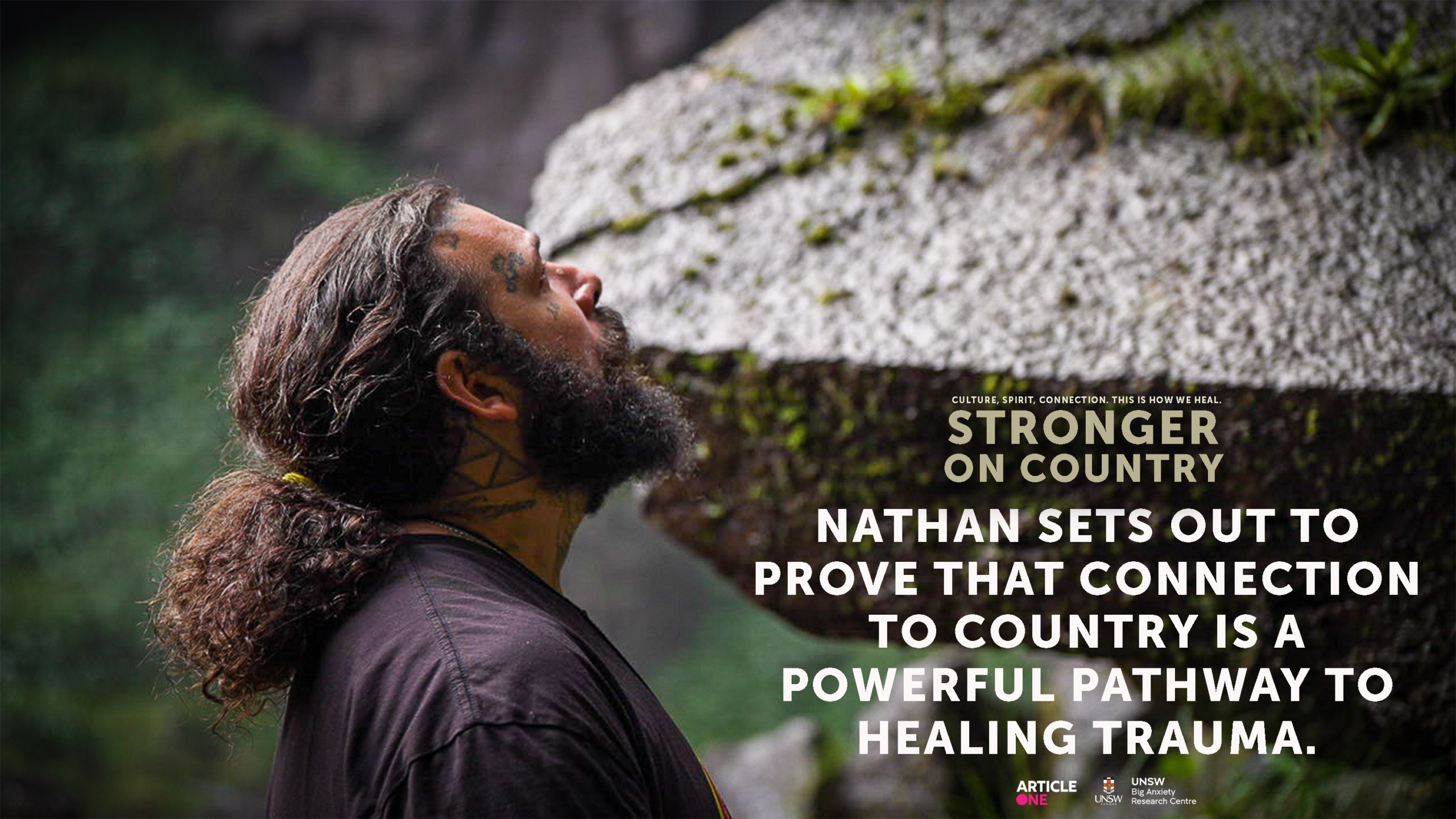
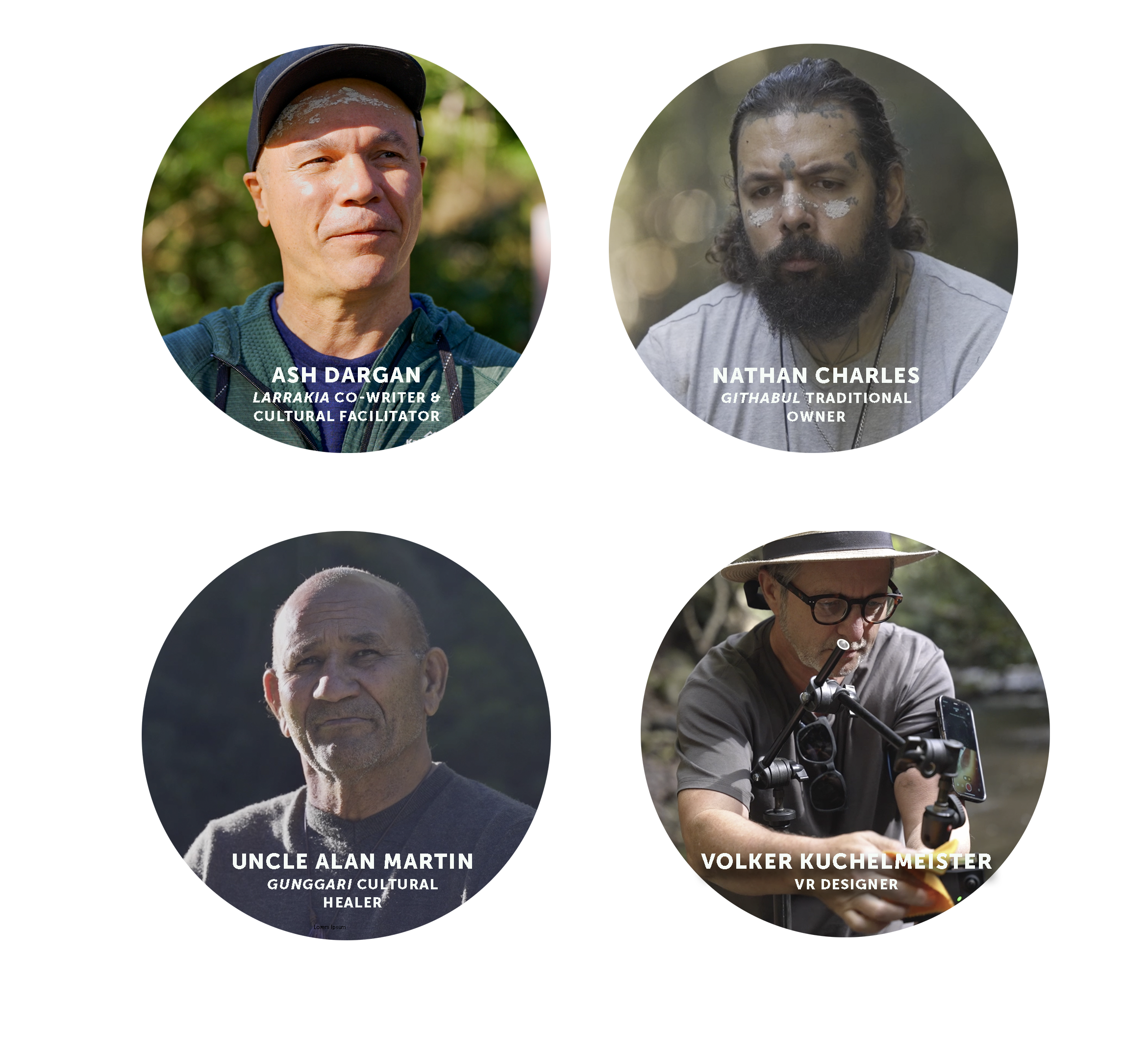
A powerful documentary currently in production and acquired by SBS-NITV featuring Ash Dargan, Nathan Charles and Uncle Alan Martin
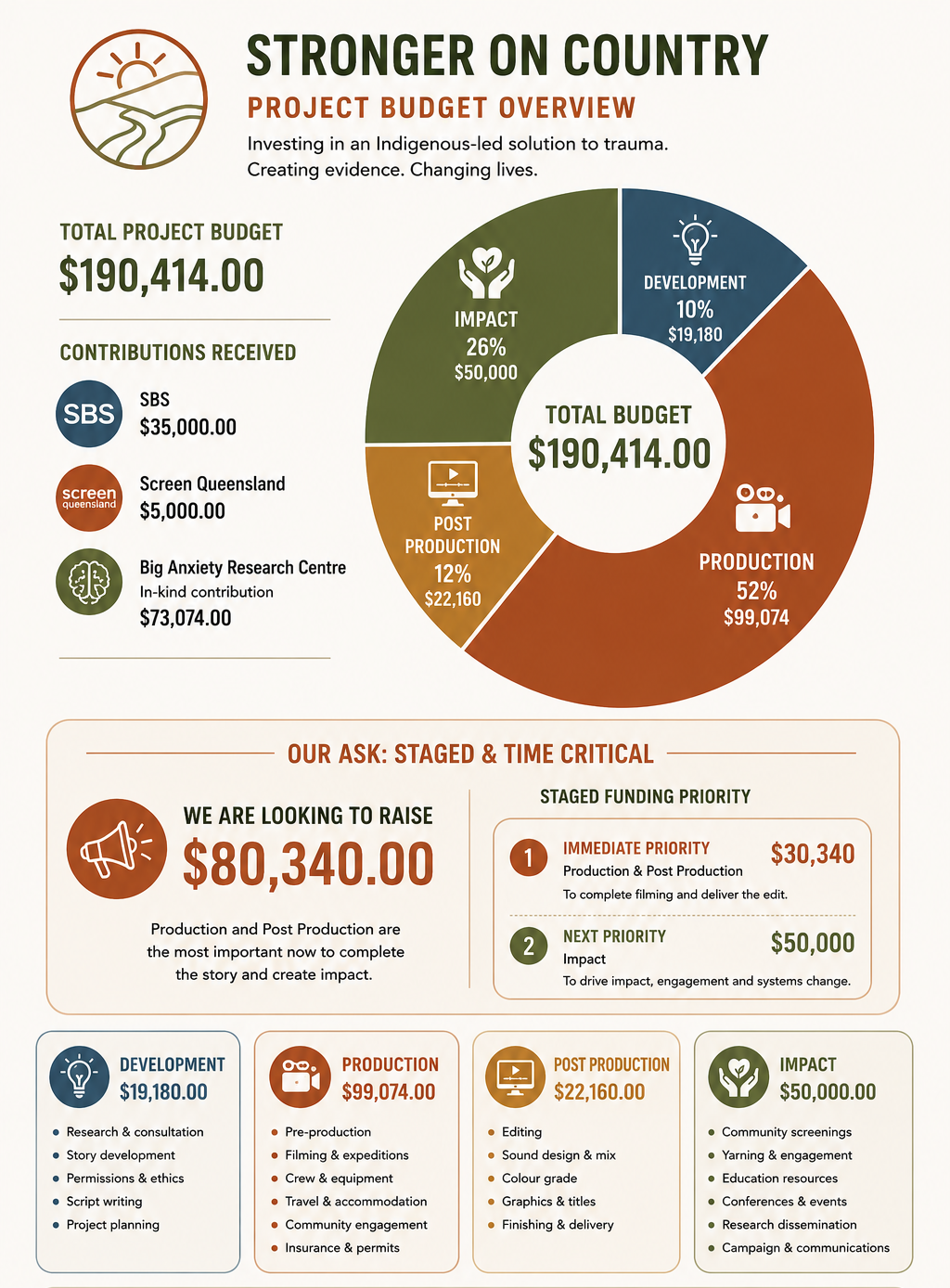
Currently seeking Completion Partners
BREAKING THE CYCLE - WHERE HEALING BEGINS
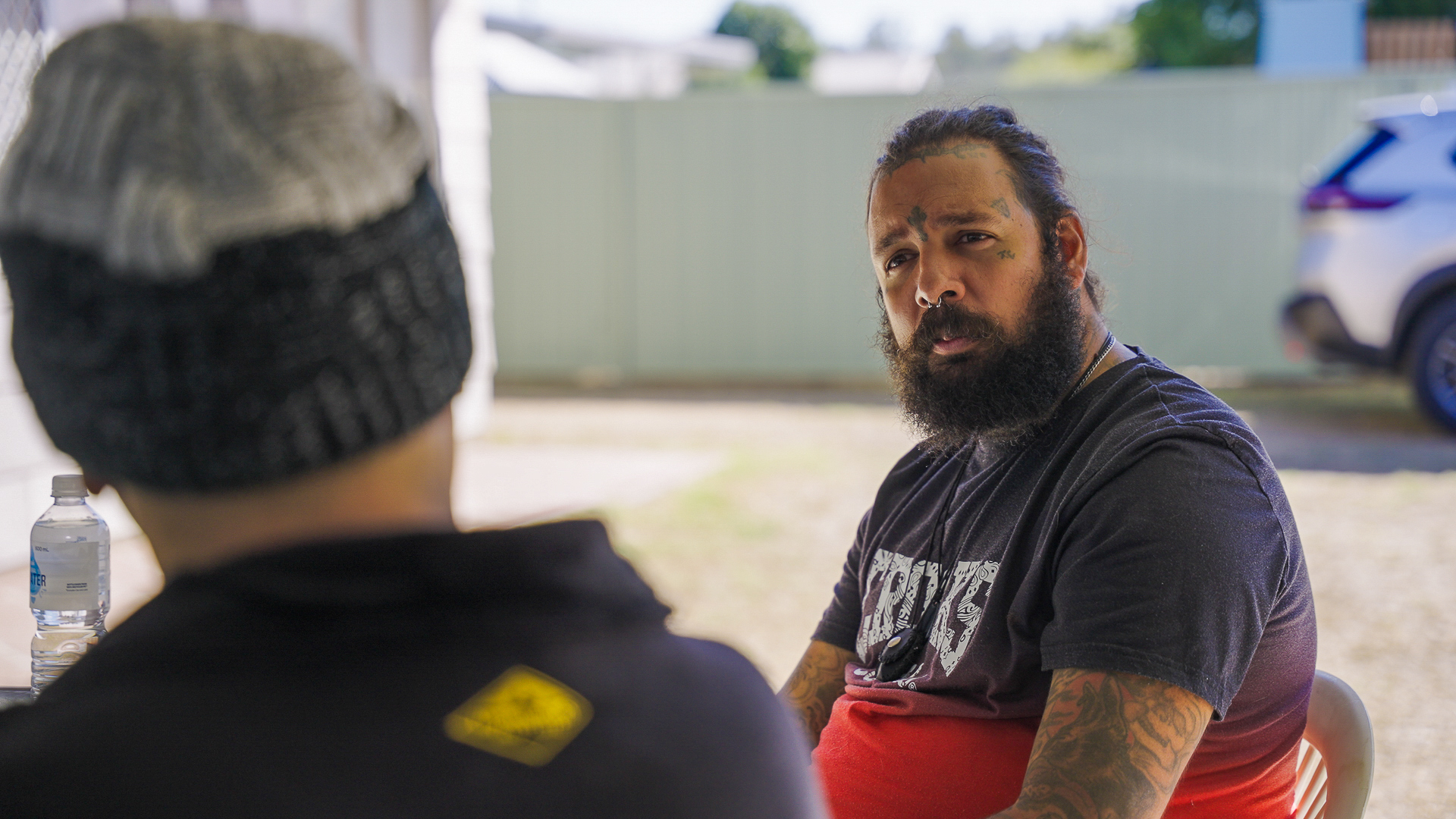
Stronger On Country follows Githabul man Nathan Charles as he helps create a groundbreaking virtual reality program combining Aboriginal cultural healing with cutting-edge research to support young Aboriginal men recovering from trauma and incarceration. As Nathan confronts his own past and the systemic barriers that continue to define him, the project seeks to demonstrate that connection to Country can become an evidence-based pathway to healing. Acquired by NITV, the documentary is currently seeking completion partners.
AN IMPACT DOCUMENTARY PROJECT BY ARTICLE ONE WITH THE BIG ANXIETY RESEARCH CENTRE
30 minute documentary acquired by SBS-NITV
Scheduled for completion early 2027
SYNOPSIS
Nathan Charles knows what it means to lose his way. As a young Githabul man, his life was shaped by trauma, incarceration and disconnection from Country before cultural healing helped him rebuild his life and rediscover purpose. Now, determined that other young Aboriginal men might find a different path, Nathan is helping create something he wishes had existed during his own darkest moments.
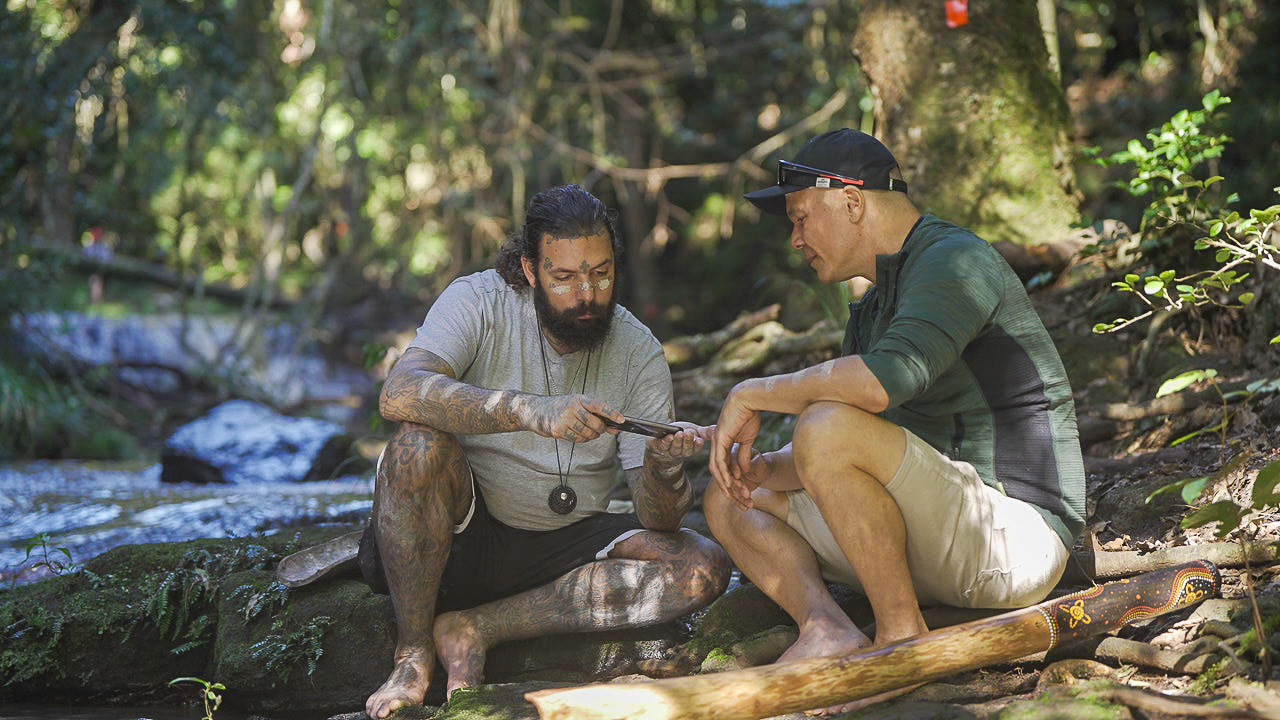
Partnering with the Big Anxiety Research Centre (BARC), Nathan joins Larrakia man, internationally renowned yidaki player and We Al-li cultural facilitator Ash Dargan, cultural healer Uncle Alan Martin, a Gungarri Elder, and VR specialist Volker Kuchelmeister on a groundbreaking research project exploring whether Aboriginal cultural approaches to trauma healing can be recognised as evidence-based clinical practice. Together, they are developing an immersive virtual reality (VR) experience that reconnects young Aboriginal men with Country, culture and spirit while generating an evidence base for the healing power of cultural connection.
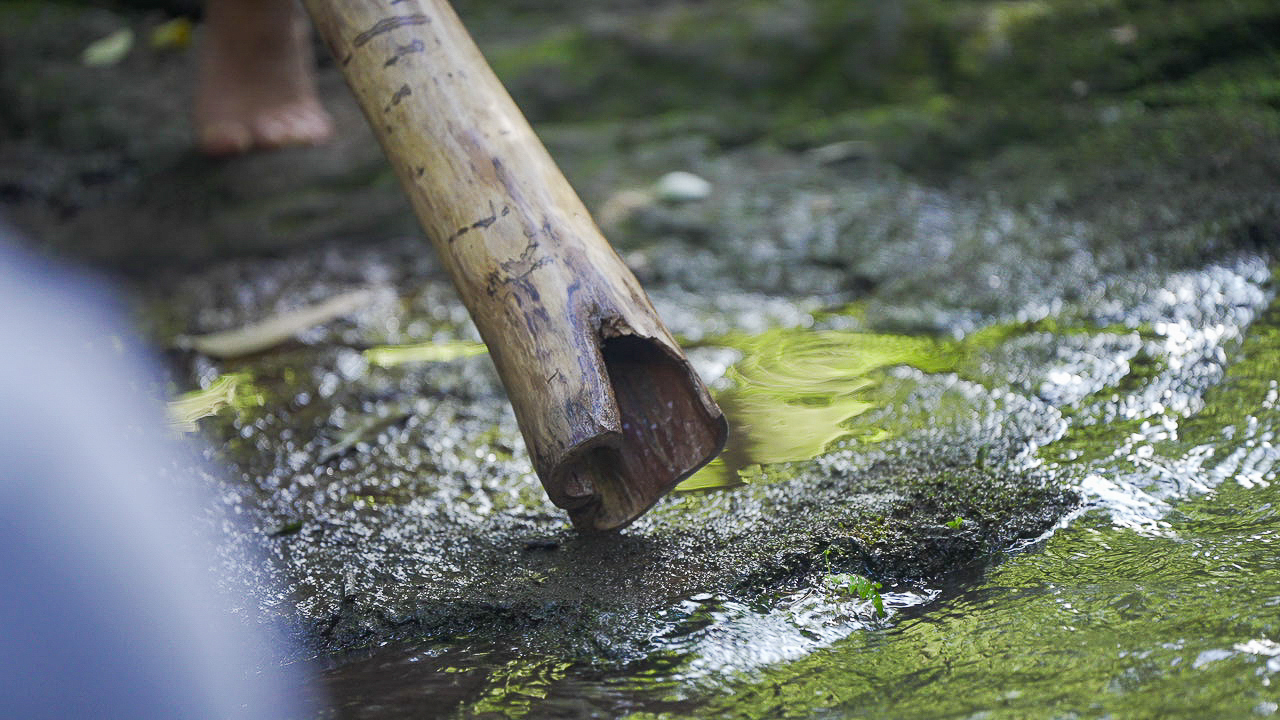
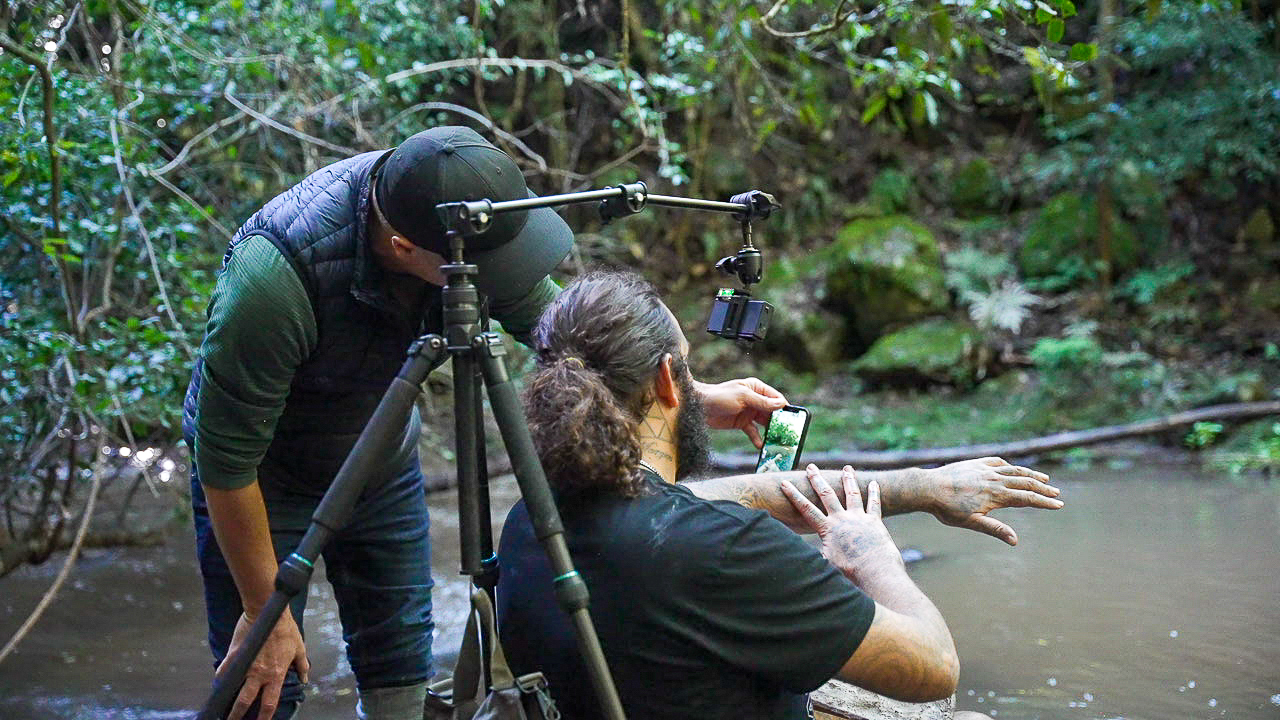
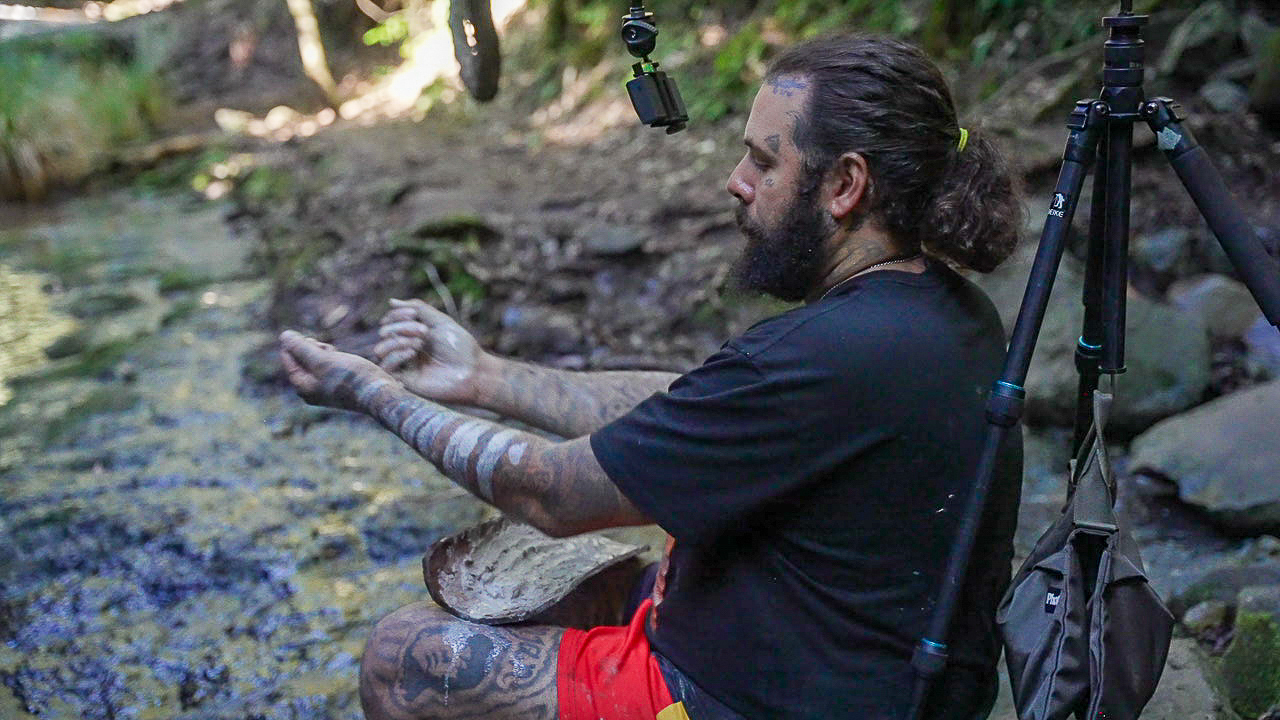
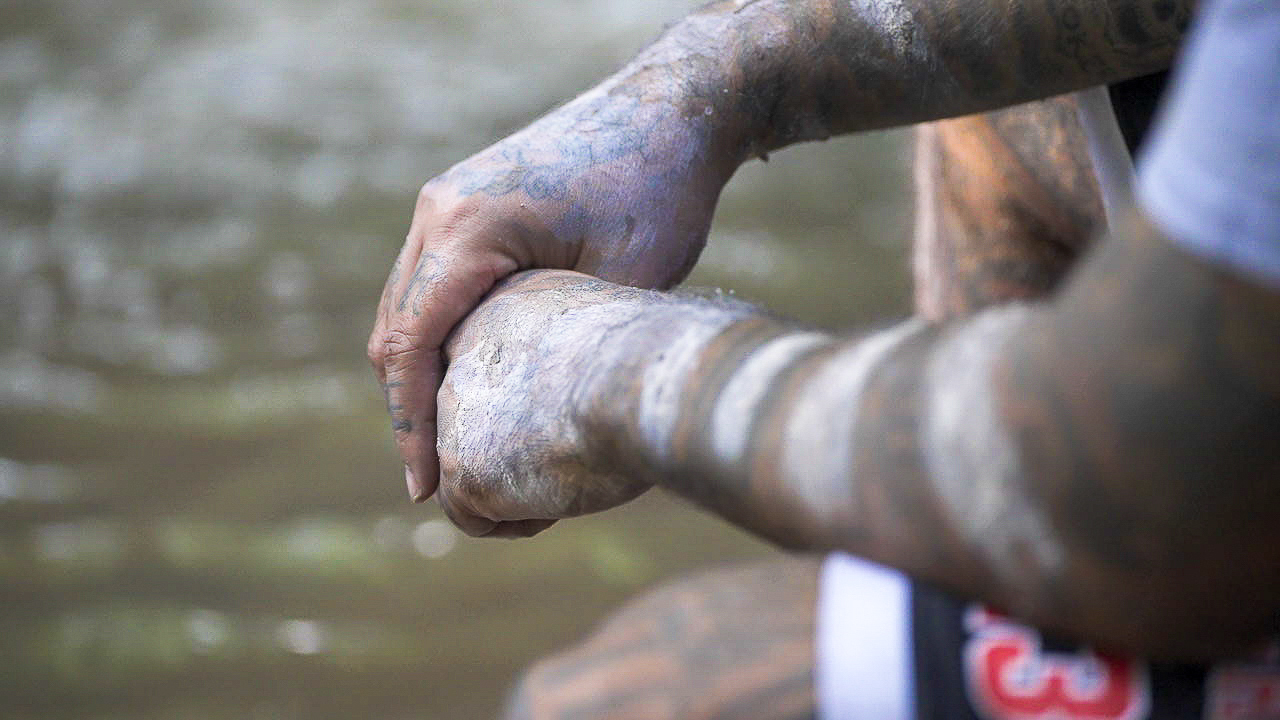
Over multiple expeditions into the spectacular Browns Falls region on Githabul Country, the team captures the landscapes, stories and cultural knowledge that become the heart of the VR experience. As the project evolves, Nathan begins to recognise that he is no longer simply contributing his story, he is helping shape a tool that could support future generations of Aboriginal young men navigating trauma, disconnection and the justice system.
Progress, however, is repeatedly tested. Ethics approval for the research is delayed for months, preventing the project from moving into its evaluation phase until approval is finally granted in July 2026. At the same time, Nathan continues a years-long battle to obtain a Working with Children Blue Card. Despite transforming his life after incarceration and providing supporting statements from respected Elders, community leaders and professionals, his application continues to be refused because of his past. The decision forces the research team to change its participant group from young people under 18 to young adults aged 18 to 25, exposing one of the documentary's central questions: if people who have genuinely healed continue to be defined by their past, how can they help lead the healing of the next generation?
Further obstacles emerge when repeated attempts to work inside Brisbane Youth Detention Centre prove impossible. Rather than abandon the project, the team redesigns the research, creating a two-day cultural healing program in Warwick for approximately fifteen young Aboriginal men recently released from prison, allowing the work to continue within the community.
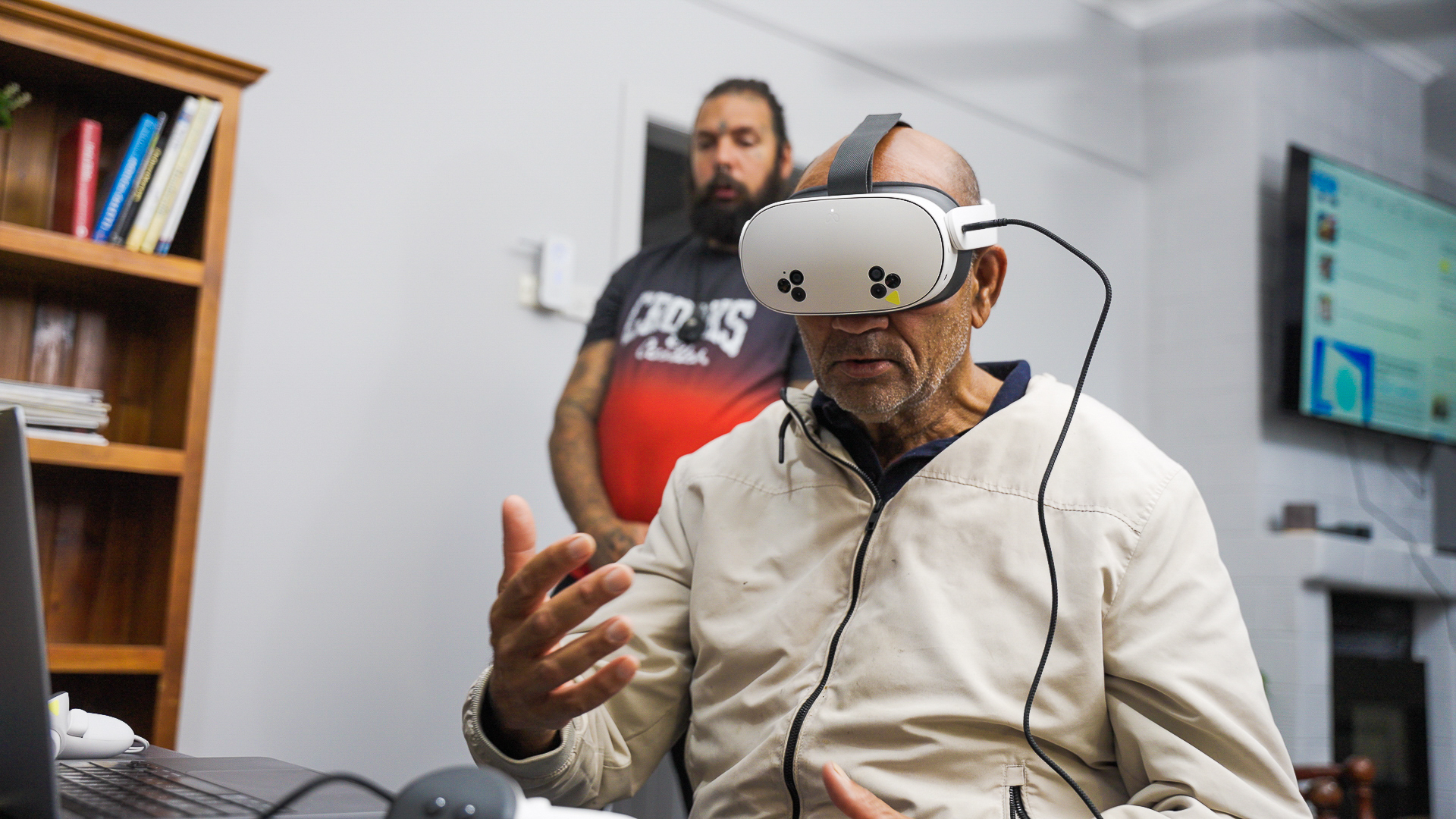
When Volker and Ash return with the completed VR experience in May 2026, the project reaches a profound turning point. Ash delivers a full day of We Al-li cultural facilitation training with Nathan and Uncle Alan, exploring the relationship between Aboriginal healing, trauma, anatomy and clinical science. Throughout the training, Nathan and Uncle Alan come to fully appreciate the enormity of what they are creating. If successful, the research has the potential to provide robust evidence supporting Aboriginal cultural approaches to trauma healing and strengthen their recognition within contemporary clinical practice.
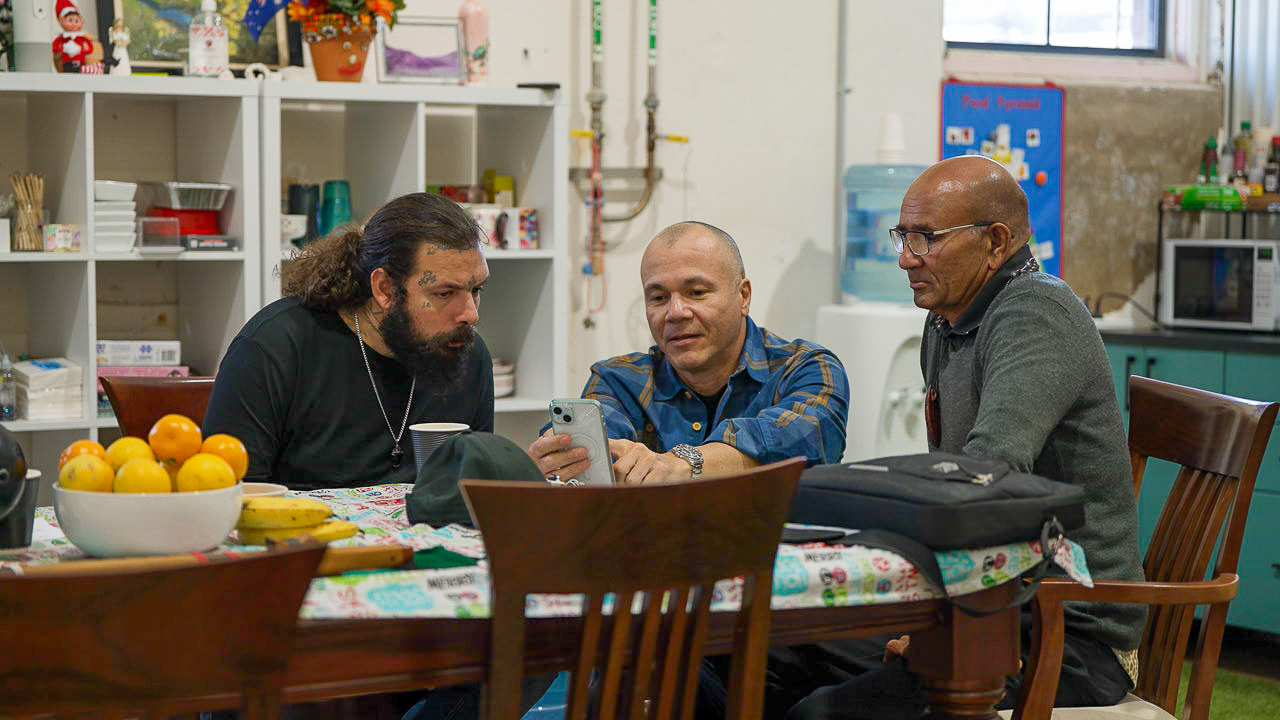
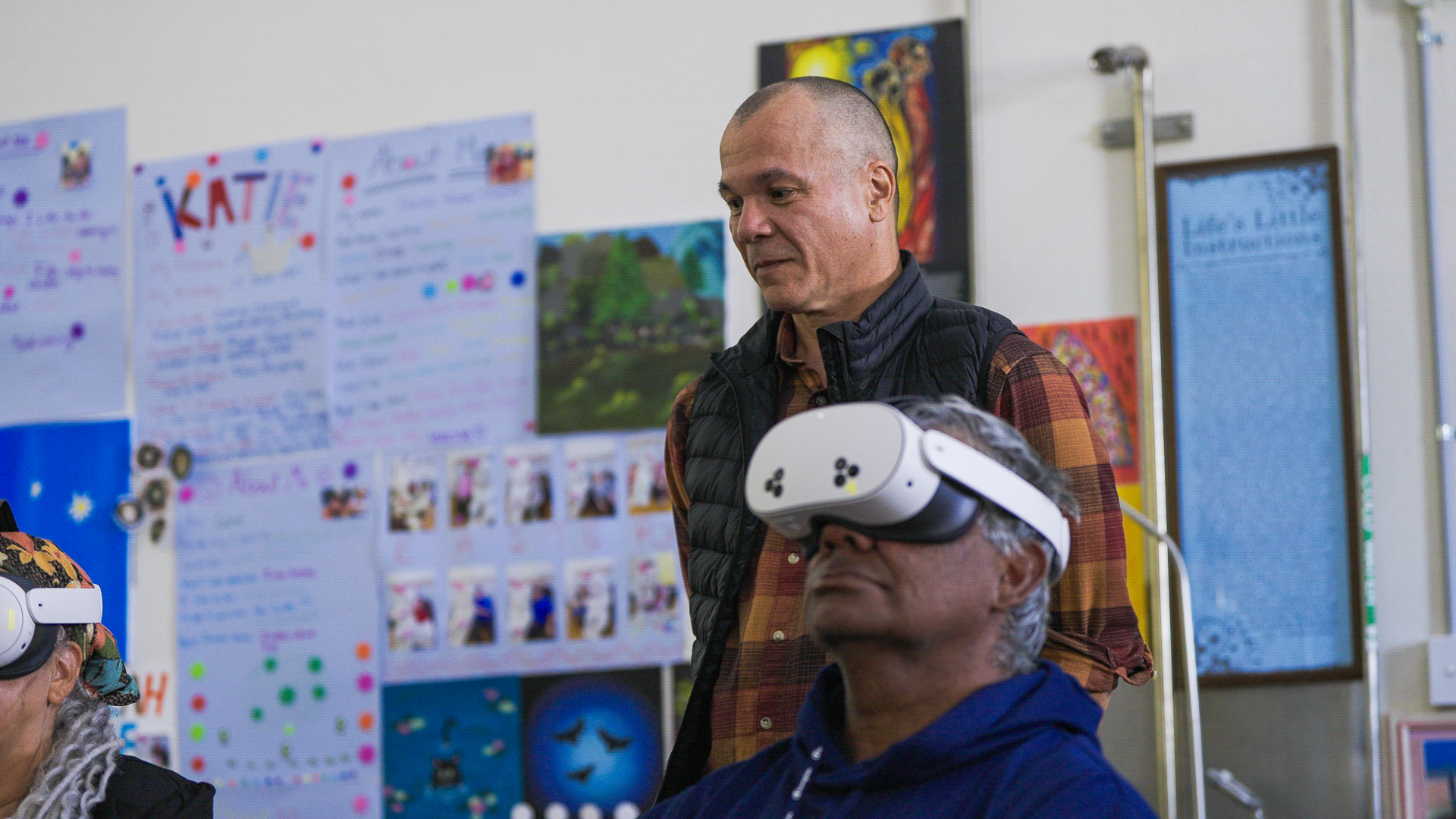
The following day, Nathan's extended family become the first people outside the project team to experience the completed VR. Nervous about presenting the work to his own community, Nathan instead emerges as a confident cultural leader. The experience is deeply emotional. Several family members describe profound responses, including Nathan's young cousin, who is navigating his own personal struggles and experiences a powerful connection through the VR. The overwhelmingly positive feedback gives the team renewed confidence that they are creating something capable of making a genuine difference.
The documentary culminates in the January 2027 cultural healing program in Warwick. Designed and facilitated by Ash alongside Nathan and Uncle Alan, the two-day program combines cultural practice with the VR experience for approximately fifteen young Aboriginal men recently released from prison. Joining the team is Associate Professor Graham Gee, an Aboriginal-Chinese clinical psychologist and leading researcher in Indigenous social and emotional wellbeing and recovery from complex trauma, who leads the clinical evaluation of the program. Through interviews, observation and formal research, the team seeks to answer a bold question: can combining cultural healing with immersive technology provide measurable evidence that Aboriginal knowledge systems deserve recognition alongside contemporary trauma treatment?
Set against the extraordinary landscapes of Githabul Country, Stronger On Country documents a remarkable collaboration between community, culture and science. At its heart is Nathan's transformation from a young man once imprisoned by trauma to an emerging cultural leader helping create a model that could reshape how Australia understands healing, justice and recovery. It is a story of hope, resilience and the power of Country to help young mob find their way home.
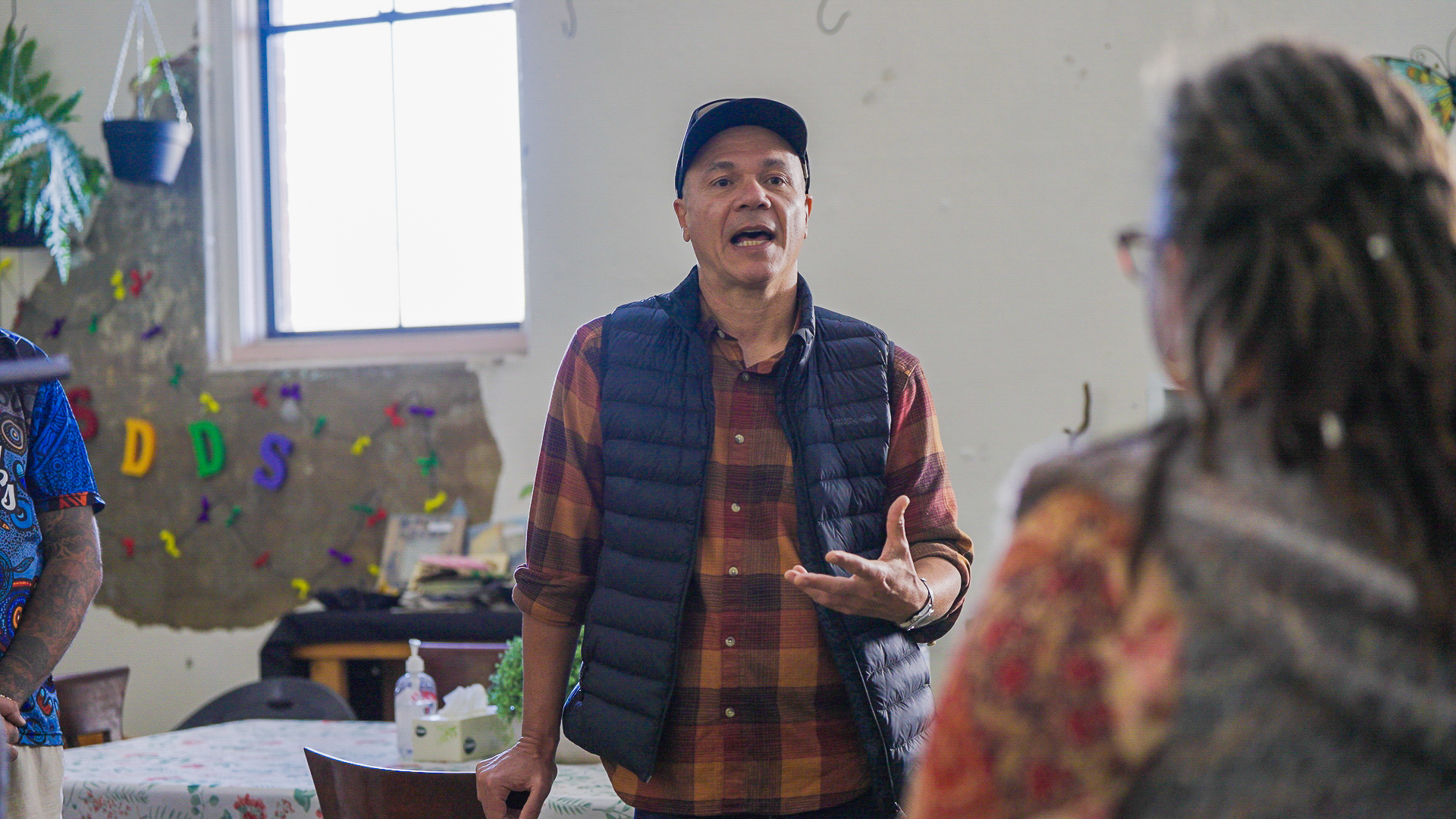

First Nations Australians are significantly over-represented in the Australian prison system, with incarceration rates far exceeding those of non-Indigenous Australians, particularly among youth. In New South Wales, the Aboriginal imprisonment rate is nearly 10 times that of non-Aboriginal Australians. Despite comprising only 3% of the adult population and 8% of the youth population, Aboriginal people make up over 30% of the adult prison population and 50% of those in youth detention.
These statistics are not just the result of individual behaviours or poor choices — they are the outcome of ongoing systemic inequality, intergenerational trauma, and the erosion of cultural continuity through colonisation, dispossession, and forced removals. For many Aboriginal families, cycles of incarceration, substance use, violence, and mental distress are legacies of historical trauma that continue to play out across generations.
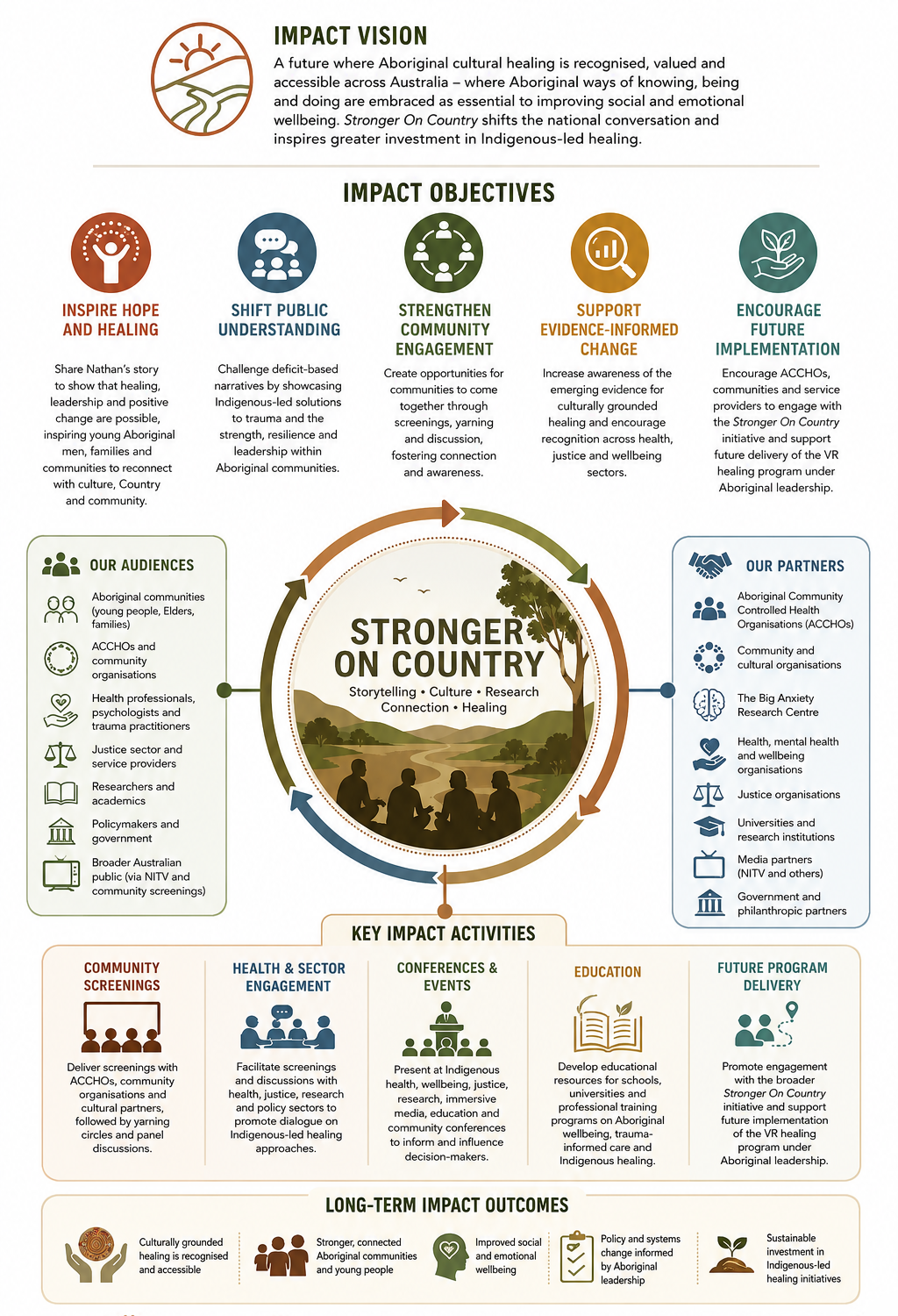
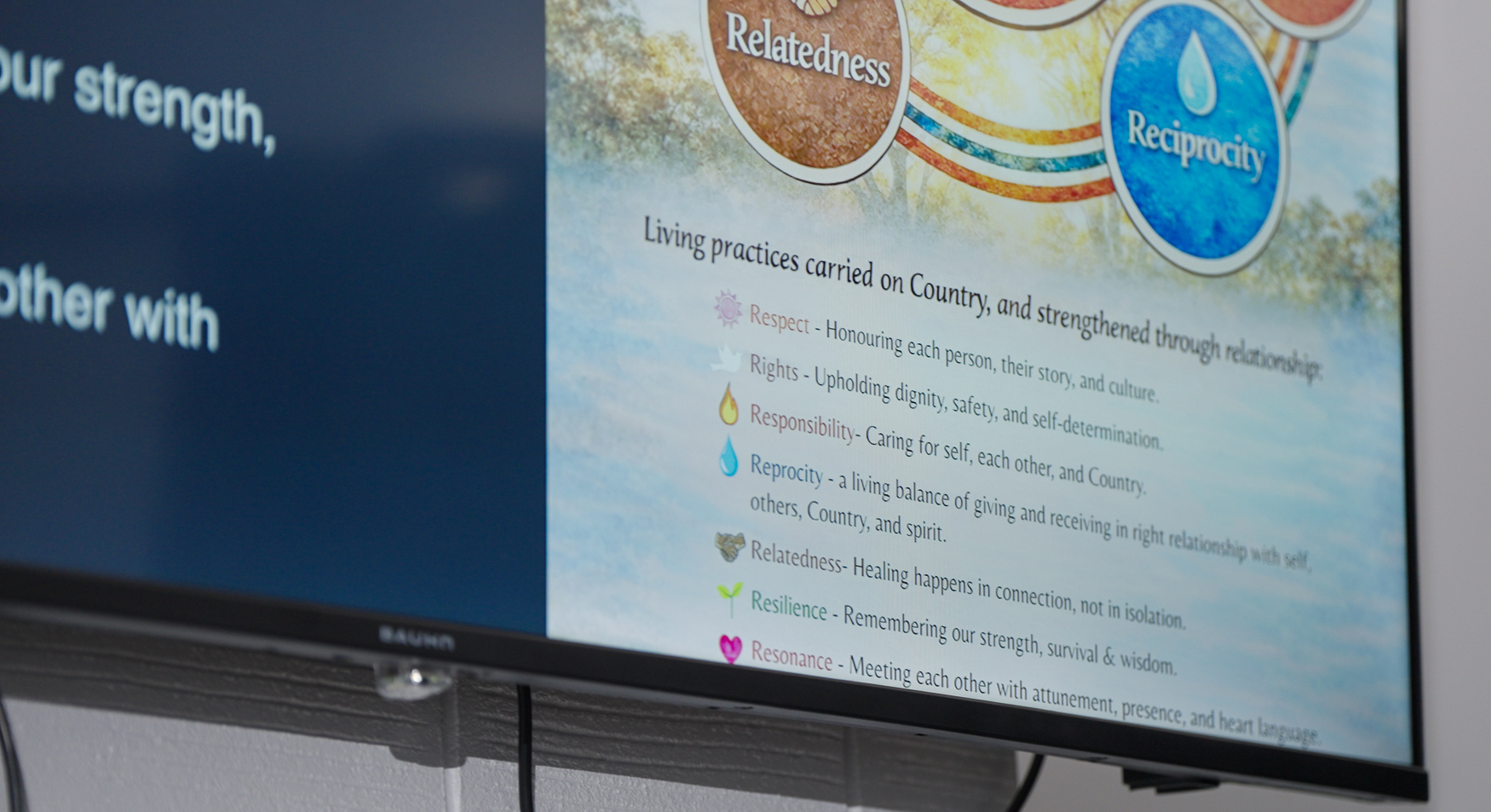
What we know and what research increasingly supports, is that Indigenous-led cultural practices have a profound and positive impact on Aboriginal mental health. Connection to Country, cultural identity, and community-based healing are protective factors that can reduce recidivism, support emotional regulation, and restore a sense of belonging. Programs grounded in culture, rather than punishment, offer more than just an intervention, they offer a pathway back to self, spirit, and strength.

STORYTELLERS
PRODUCTION TEAM
A COLLABORATION BETWEEN

FOR MORE OF OUR FILMS CHECK OUT OUR VIMEO PAGE

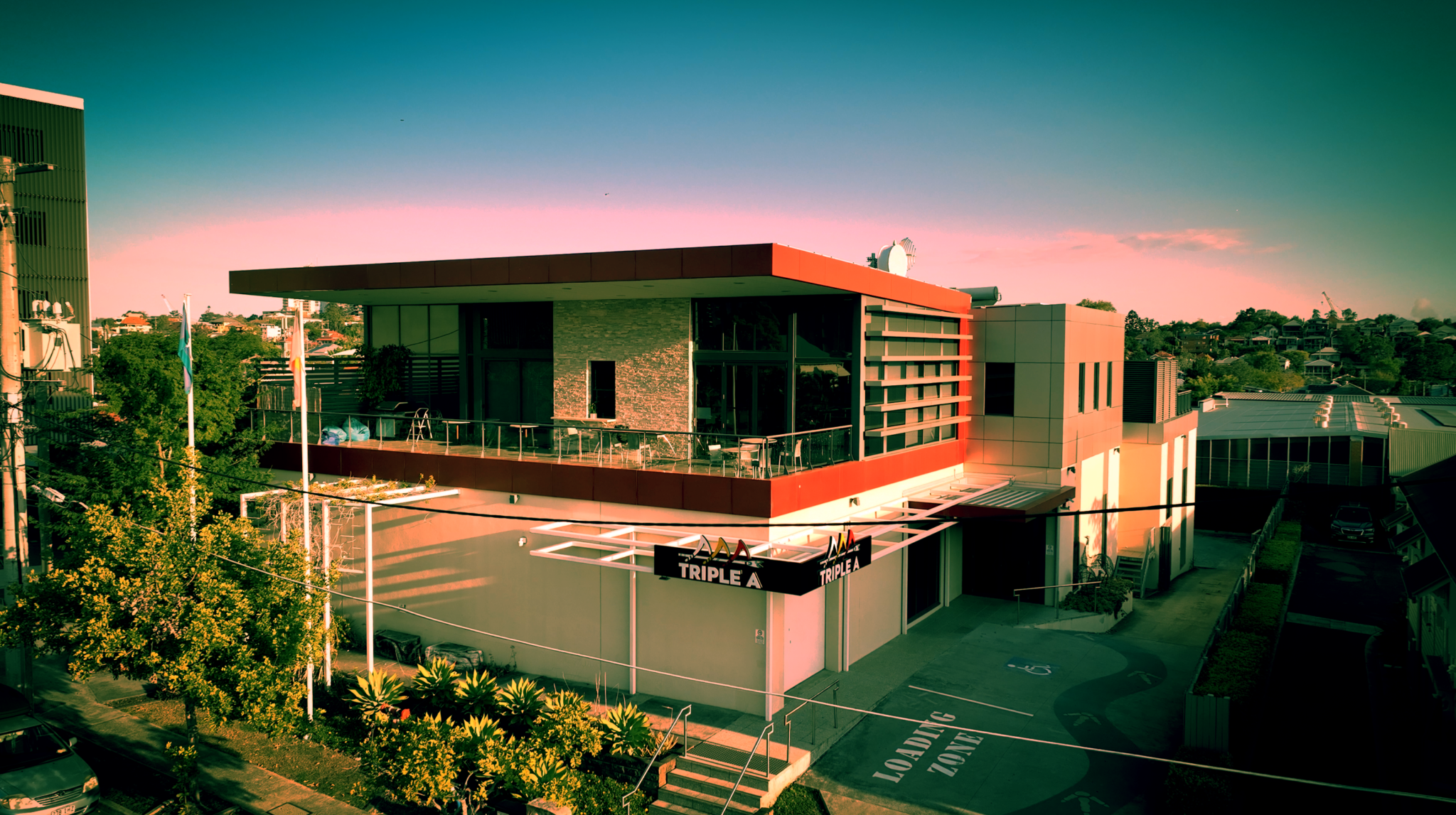
TRIPLE A has sound and film recording spaces for hire.
Postal address: 2 Ambleside Street, West End 4101
Phone: (07) 3892 0100
Email: dewi@triplea.org.au